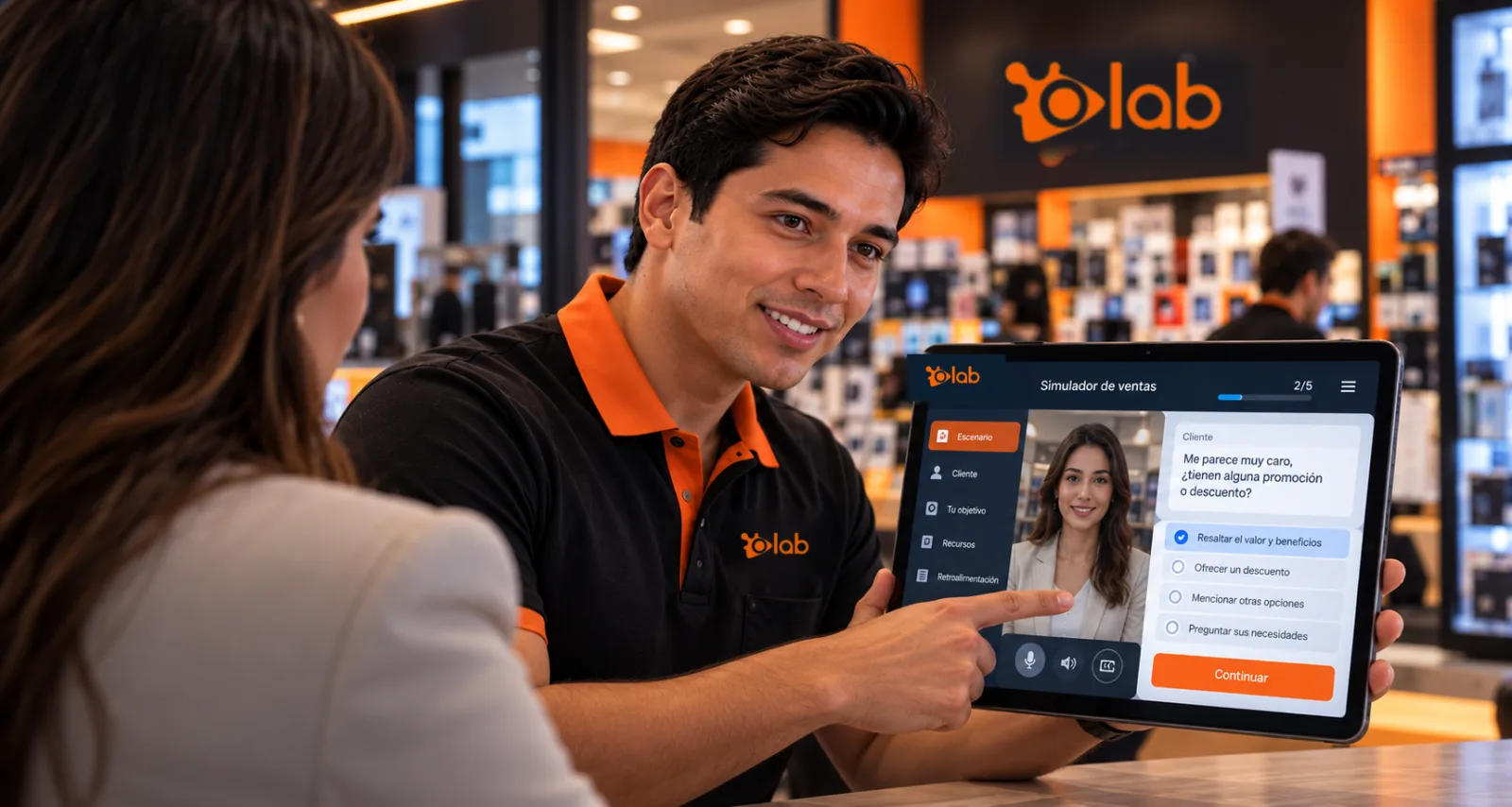
Meet the tough customer before you meet them.
AI customers who object, get frustrated and ask what nobody wants to hear.
The Best Time to Lose a Customer Is During Practice.
Turn every salesperson into a better communicator. Every conversation into a learning opportunity.
Your team knows your products. They’ve attended the training. They’ve read the sales playbook. But what happens when a customer raises an unexpected objection, becomes frustrated, or asks a difficult question?
With O-Lab AI, employees can practice realistic customer conversations with AI-powered characters that challenge their responses and help them improve. No awkward roleplay sessions. No risking real customer relationships. Just practice, feedback, and continuous improvement.
Your customer shouldn’t be your team’s first practice session.
Customer-facing teams encounter unpredictable situations every day.
Product knowledge isn’t enough
Employees need to know how to communicate value, listen, and respond.
Traditional roleplay is difficult to scale
Managers cannot personally coach every conversation.
New hires need practice
Learning on the job can create inconsistent customer experiences.
Objections are unpredictable
Salespeople need the confidence to respond to different customer concerns.
Service quality varies
Customers can receive very different experiences depending on who assists them.
Practice the conversations that drive your business.
- 1
AI Customer Roleplay
Meet the most demanding customer you’ve ever had.
Create conversational AI characters with different personalities, needs, emotions, and objections. Employees practice in realistic situations and receive structured feedback.
Example: A price-sensitive customer compares your product with a cheaper competitor and challenges its value.
- 2
Sales Objection Handling
Turn difficult questions into confident answers.
Practice price negotiations, product comparisons, hesitant buyers, and common objections.
- 3
Product Knowledge Games
Become the product expert customers trust.
Transform catalogs, specifications, product updates, and sales materials into interactive experiences.
Example: A retail associate helps a simulated customer choose the most suitable product based on their needs.
- 4
Customer Service Simulations
Practice empathy under pressure.
Prepare employees to handle complaints, delays, returns, escalations, and emotionally charged situations.
- 5
Sales Onboarding
Get new representatives conversation-ready.
Create practice journeys covering product knowledge, discovery questions, qualification, objections, and customer follow-up.
- 6
AI Coaching & Feedback
Turn practice into improvement.
Define evaluation criteria such as active listening, accuracy, product knowledge, empathy, and communication. Employees can repeat scenarios, review feedback, and work toward better performance.
- 7
Consistent Customer Experiences
Build a shared service standard.
Help distributed teams practice the same standards while adapting simulations to different products, markets, and customer types.
More confident teams. Better customer conversations.
Business outcomes to measure:
- Time to readiness for sales and service employees
- Improvement in roleplay performance
- Product knowledge accuracy
- Quality of customer interactions
- Objection-handling confidence
- Sales conversion and service satisfaction trends
Can You Close the Deal?
Talk to an AI customer who thinks your product is too expensive.
Ask questions, identify their priorities, explain value, and respond to objections. At the end, receive feedback on your communication, customer discovery, and objection handling.
We play it with you live during the demo.
Ask for it in your demoYour operation does not end here.
Don’t make your customers pay for your team’s learning curve.
Practice first. Perform better when it counts.